Have you ever feel pushed to do what you didn’t feel was right?
Moral injury can happen when we are put into situations where we feel we need to behave in a way that we don’t think is right. Jonathan Shay defined moral injury as a psychological wound that is caused by the violation of a person’s moral or ethical values. It happens when someone has witnessed or participated in actions that violate their sense of right and wrong.
Aristotle wrote that our actions can shape our characters. He thought that we flourish, or are truly happy, or experience eudaimonia, when we develop a virtuous character. He thought that we obtain this character when we act repeatedly in ways many consider virtuous – such as being courageous, honest, generous, temperate, friendly, seeking justice and fairness.
When we somehow feel forced by circumstances into actions that run counter to these virtues, Shay wrote that this can create moral injury, shaping our characters in ways that we do not want, and this harms us. Aristotle calls certain actions “countervoluntary” in the Nicomachean Ethics, ones that go against what we might voluntarily desire yet he did not think these actions shape our characters. However, Shay uses military experiences as an example to argue that countervoluntary action can lead to moral injury, such as when soldiers participate in killing people when they feel these acts are not harmonious with what they consider virtuous. Shay writes that ‘extrinsic luck’ can get in the way of voluntary action. In Moral Luck, Bernard Williams defines extrinsic luck as, “the circumstances that are not of our own making.” Extrinsic luck concerns factors beyond our control. Shay argues that these kinds of countervoluntary actions can lead to moral injury and affect our character, damaging us. (This is not quite the same as setting out to do something, freely chosen, that violates our sense of what is right, consciously deciding to do something that we know is wrong when circumstances give us the opportunity to act differently. But it can still do us harm.)
Another example of this is when health care workers are involved in situations where they have to act in ways that they think have harmed people. They are often faced with trade-offs that don’t feel right to them. This can cause moral injury.
In my writings about the Integral Core of who we are, I speak about this issue some. We want to be acting with integrity, and it feels good to do so. But situations such as your job or family obligations or other circumstances can push you to act in ways that do not feel true to your core self, and to what you believe is right. What then?
Have you been in situations where you have felt forced to act in ways that are counter to your values? Do you think injury happened to your character in the process? If so, is there any way you can repair the injury afterwards? Does it help to acknowledge that how you felt forced to act did not reflect who you are? Sometimes we can avoid the situations in the future, but that is not always the case. Can we reflect on the situations and see that these actions do not reflect who we are now, our character, and wisely move on knowing that? We are still who we are. We were put in situations that pushed us out of shape. But we can return to feel at home in a core self that is not defined by those actions and move into the future from that solid footing.
Shay, Jonathan. 1994. Achilles in Vietnam. Ontario: Macmillan Publishing Company, 22.
Williams, Bernard. 1981. Moral Luck. New York City: Cambridge University Press., 39.Broadie, Ethics with Aristotle, 91.


 A chapter in a book I am working on explores how we are not machines, yet can be duped into thinking that we are. It is part of a book that centers on how a person can flourish in difficult circumstances. As I was writing it, the Generative AI, Chat GPT, and computer future fears surfaced in the media, and we have been alerted to an acceleration of human-seeming abilities of technology. I found myself concerned with issues that are arising now, rather than long term fears, and wrote a paper for the US Office of Science and Technology Policy with recommendations for action. There are many people who can speak to so many issues raised by AI, but I thought there were some things that were being left out of discussions, and my scholarship in human relationships might be helpful in making recommendations for action and making a case for those.
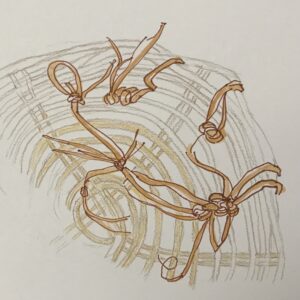 When we have experienced emotional or physical or relationship damage in the past, it can continue to feel frustrating at best and irreparably harmful at worst. I so often look at the broken places as problems, limitations, and inadequacies. Or I try to ignore them. But the kintsugi approach actually highlights the beauty in repairs.

 We hear people say to ‘Get over it!’ But is that such good advice? This poem expresses a response to that better than I can.

 ‘The History of Philosophy without any Gaps.” is a podcast I have listened to for years and love. I have learned so much. Many of the episodes, on topics of particular interest to me, I listen to 2 or 3 times. If I find this fun, what does this say about me? The presenter, Peter Adamson, has a sense of humor, and is open-minded, and has such a knowledge base, and provides a depth of content that he expresses so well. I listen on iTunes, but here is a link to his website:

 In so much of life I see words obscuring truth. Here is something that reminds me that words don’t necessarily hide the truth, but can liberate it.


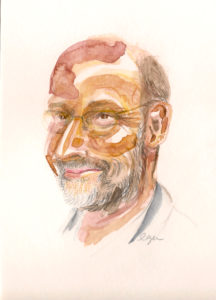
 I have been part of a group of scholars these past few months, discussing suffering from the perspectives of literature, philosophy, theology and psychology. During our weekly conversations I have found that drawing people in the group, as always, helps me to focus. Although ideas are so often the center of academic discussions, it is the human beings that speak to me. Each person has a depth of being, a fullness of life, that I want to capture somehow. Doing this brings me to appreciate them more.


 There is always

 I have spent a lot of time in various meetings over the last couple of months. When I am not speaking, there is lots of time for listening. I find that by drawing people, it helps me to focus, and also to ‘get’ people in a more
  complex way, to hear them beyond their words or silences. Here are a few sketches of lovely people from a recent meeting.



 No one ever told us we had to study our lives,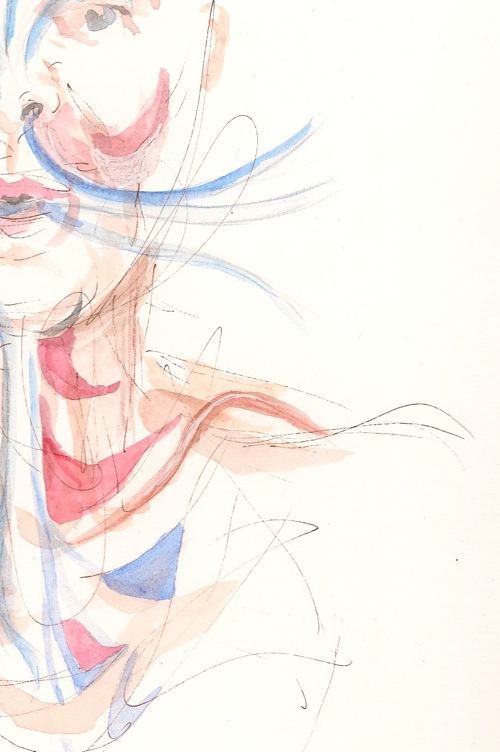



 MUSIC
MUSIC
